Sprint City
Project Details
Role
Senior gameplay designer
Time frame
June 2025 - June 2026
Team size
8
Engine
Defold
Software used
● Custom level editor to:
make 95% of the playable tracks, and the rest of the world including points of interest and hangout spots.
● Visual Studio Code for Lua scripting
Developer
Second Stage Studio
Released on
● Steam
What is Sprint City?
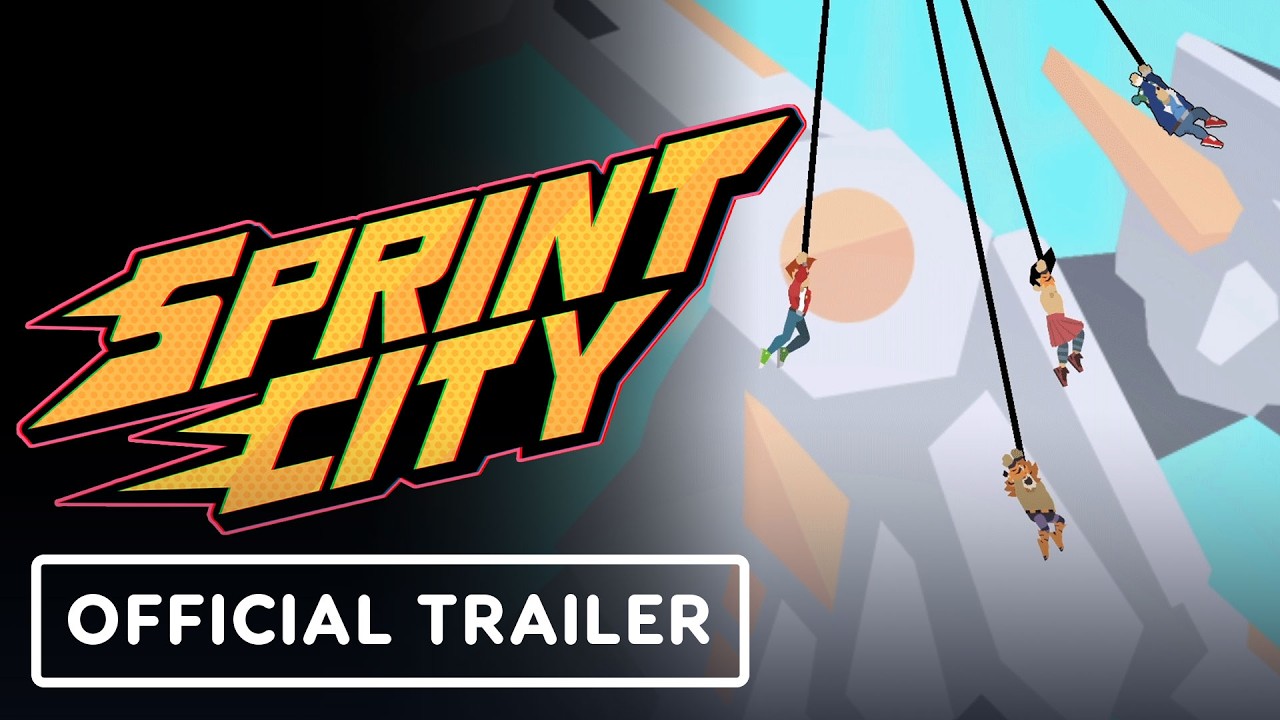
Sprint City is a fast-paced competitive 2D platformer, designed as a spiritual successor of Speedrunners. Race against other players in a shared world using grappling hooks, wall-runs, rail grinds, and powerful items pickups to beat the competition.
Compete in precision-focused time trials where every millisecond counts, or battle it out in versus races where the slowest players are eliminated as the race intensifies.
Beyond racing, Sprint City is a social playground. Hang out with friends, explore the city, and jump into community activities like tag, football, and other casual minigames. Up to seven friends can join and play for free directly through their web browser.
Player expression is at the heart of Sprint City. Customize your character with unlockable outfits, show off your skills in the shared world, and create your own tracks to challenge the community and discover new ways to play.
Responsibilities
Ownership, designing, and cross-discipline communication for:
-
World, level, and point-of-interest design
-
Designed the full game world and its points of interest, treating every playable space as potential raceable terrain.
-
Created the majority of playable race tracks, with a focus on flow, traversal mastery, and replayability.
-
Designed world geometry to support player-created Time Trials, allowing players to place a start and finish anywhere in the city.
-
-
Feature design
-
Progression systems: XP, rewards, unlock structure, and pacing.
-
New-player onboarding: tutorial design and the player flow for the first 15 minutes. Ensuring the player can set goals for themselves afterwards and has an understanding of the core gameplay.
-
Item pickups designed for both versus racing and exploration.
-
-
Gameplay balance
-
Balanced systems, routes, pickups, and competitive interactions to support a fair, expressive racing experience.
-
-
Prototyping and implementation
-
LUA scripting to prototype and implement features, including UI.
-
Led feature kick-offs and communicated design intent, scope, and implementation needs across the team.
-
Feature breakdown: Designing a raceable shared world
The design constraint
Sprint City is not only a collection of authored race tracks. Players can create their own Time Trials by placing a start and finish anywhere in the shared world. This meant that the city had to work as an open racing playground: every playable environment, including spaces made for exploration and socializing, also needed to be viable to race through.
Designing beyond the track
Rather than treating non-race spaces as scenery between official tracks, I designed them as potential routes. The geometry needed to support movement at speed, provide readable lines through the environment, and leave room for players to find their own solutions.
Every area had to be considered through a racing lens:
-
Can players maintain or regain momentum here?
-
Are there interesting choices in how to traverse the space?
-
Is the route readable enough to invite experimentation rather than frustration?
-
Can the space support both a casual social purpose and a competitive challenge?
Balancing purpose and freedom
The challenge was to retain the character of a lively shared world without making areas feel like stripped-back race courses. Points of interest and hangout spots still needed to feel inviting, but their geometry also had to support movement, routing, and discovery. This made the broader city as deliberate a part of the competitive design as its authored tracks.
Result
Racing is not confined to dedicated tracks. Exploration can become competition at any moment, giving players more ways to engage with the city and make their own challenges.
Players are able to share a weblink that allows you to play the game through a webbrowser for free! Free users were limited to only able to play that track.
It was fun to see players share their own tracks through the Discord server.
Challenges
-
Living up to the legacy of SpeedRunners. As its spiritual successor, Sprint City needed to honor what players loved about the original without merely recreating it. I studied gameplay footage to understand how players read a track, discover shortcuts, preserve momentum, recover from mistakes, and build mastery over time. The challenge was translating those lessons into tracks that feel familiar to SpeedRunners players while offering a distinct, modern evolution of the genre.
-
Design the world not part of a race track. Players could also create their own 'time trials' by placing a start and finish somewhere in the world. So every geometry of the world had to adhere to the fact that you also need to be able to race in it, even when it's not part of a regular race track
-
Designing a shared city that works as a social space, an exploration space, and a competitive racing environment.
-
Supporting new players without lowering the skill ceiling for experienced racing-platformer players.
-
-
Designing pickups that support both competitive racing and exploration without confusing their purpose.
Achievements
-
Designed the full game world, its points of interest, and the majority of Sprint City’s playable race tracks. Where players would hang out or had oppertunities to create their own tracks based on the environment I designed ingame
-
Owned progression, onboarding, and pickup design from initial concept through communication, iteration, and implementation.
-
Created an onboarding flow that helps new players understand the core game and set their own goals after the first 15 minutes.
-
Used Lua to prototype and implement gameplay features and UI.
-
Learned a new and upcomming game engine, which didn't have a lot of documentation yet during development.


